I’m so pleased to see the Gutenberg team has started to develop a Form block for WordPress core. This is being done as an experiment within the Gutenberg plugin.
If the Form Block eventually becomes part of WordPress core, this could allow many WordPress users to meet their need for a simple contact form on their site, without having to install a plugin. Operating directly in the Block Editor, the Form Block will allow these users to create a simple form in the same way they add any other block to their site.
Forms in WordPress could become just one more block via this Gutenberg experiment.
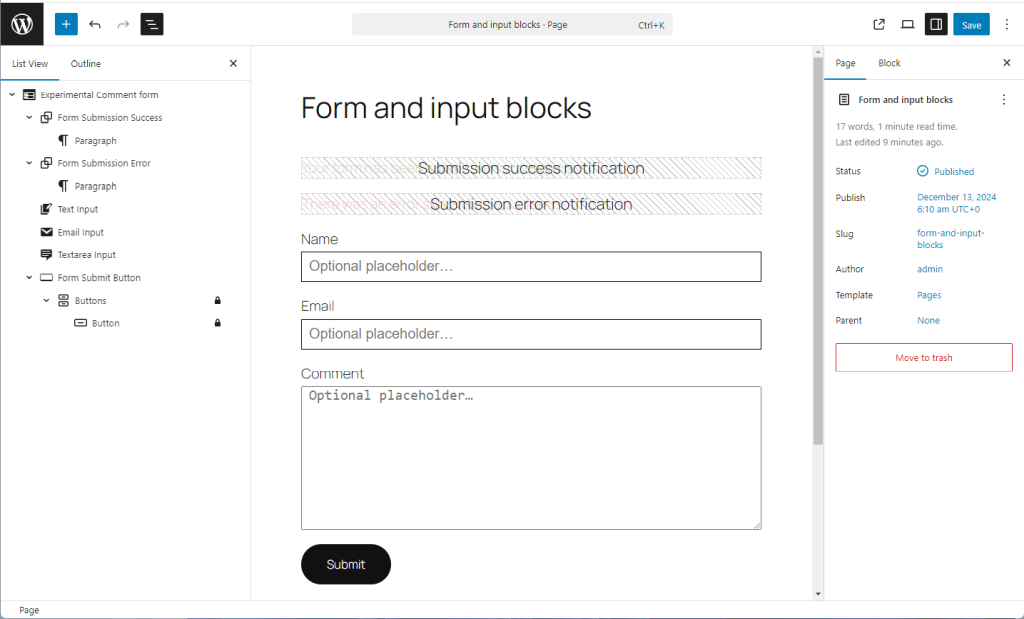
To see the current state of this experiment you need to install the latest version of the Gutenberg plugin & activate the Form and Input blocks option under Experimental settings.
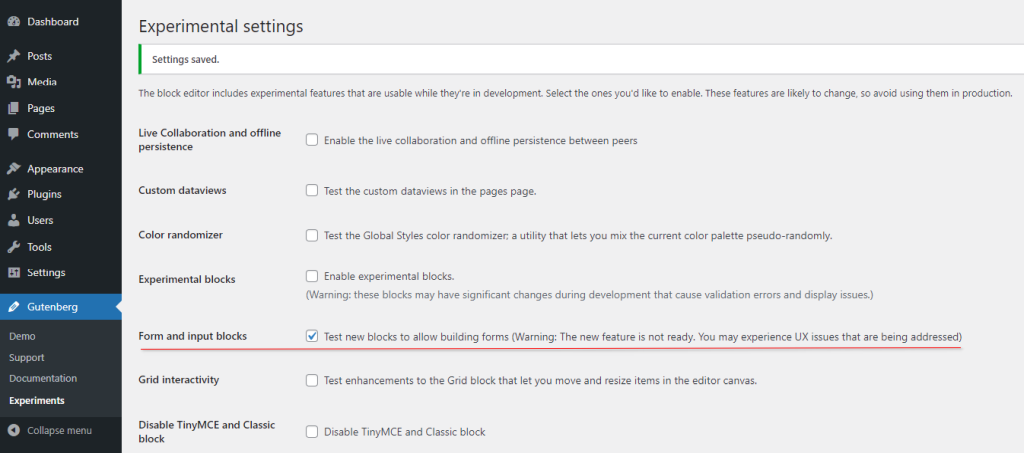
Table of Contents #
- Form Block Benefits
- Form Block Progress so far
- Forms in WordPress
- Downsides from forms not being in WordPress core
- Forms in the pre-Gutenberg era
- Forms directly within the Block Editor using Form block
- Better Forms all round via Form Block
- Conclusion
Form Block Benefits #
The Form Block could offer the following advantages to both WordPress Users & Form Plugin Authors:
WordPress Users
- create simple contact forms without needing to install a plugin.
- create and edit forms directly within the familiar Block Editor, similar to adding any other block.
- all form functionality can be edited directly within the Form Block.
- provide the basis for a more consistent user interface (UI) for form creation across WordPress.
- build accessible basic forms without any extra effort from the user.
- users may have less need to learn the unique interface of separate form plugins for basic forms.
Form Plugin Authors
- encourage plugin authors to further integrate their plugins directly within the Gutenberg/Block Editor
- provide a basic foundation that existing form plugins can extend
- allow plugin authors to focus on more advanced features rather than building core form functionalities from scratch
- provide more consistent user-friendly experiences for their users
- simplify & improve the process of creating accessible forms for their users
Having the Form Block in WordPress core could offer advantages to both WordPress Users & Form Plugin Authors.
Form Block progress so far #
This is of course just the start of a long process that would be required to bring forms directly into WordPress core. It’s by no means certain that this experiment will eventually make it into WordPress core.
The features currently available are limited & don’t match the features users would experience using many of the current form plugins. The Form Block currently focuses on the form capabilities that are required for some simple contact forms.
It’s not advisable to enable this experiment on a live WordPress website. However, if you are willing to set this up on a local WordPress install & try using the Form Block on some of your common use cases, the Gutenberg team would appreciate early feedback.
It’s by no means certain that this experiment will eventually make it into WordPress core.
Forms in WordPress #
Forms are an essential part of nearly every WordPress site, yet this key website component has previously been left to plugins to deliver.
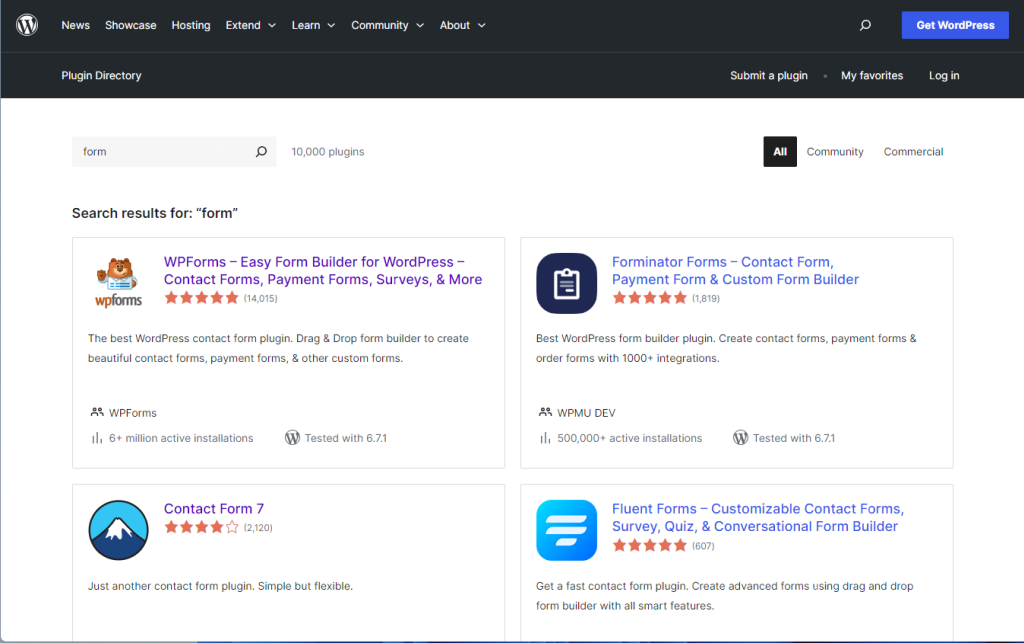
Refer: Search result for “form” in Plugin Directory
These form plugins have done a great job helping millions of WordPress users add simple & complex forms to their sites.
But there are some downsides to forms not being done in core.
Downsides from forms not being in WordPress core #
The range of WordPress form plugins available give users effective ways to create the forms they need, but they do this with little UI consistency & generally no cross-plugin compatibility.
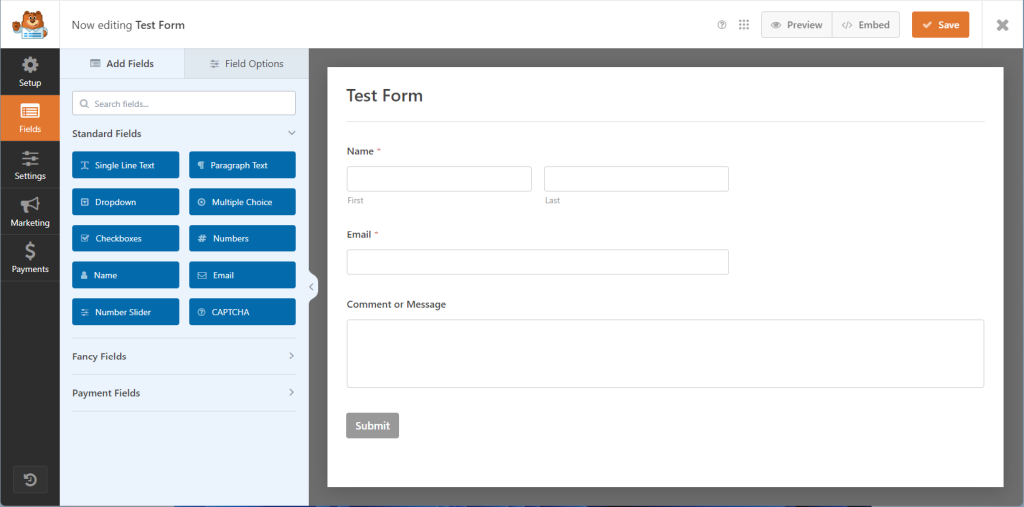
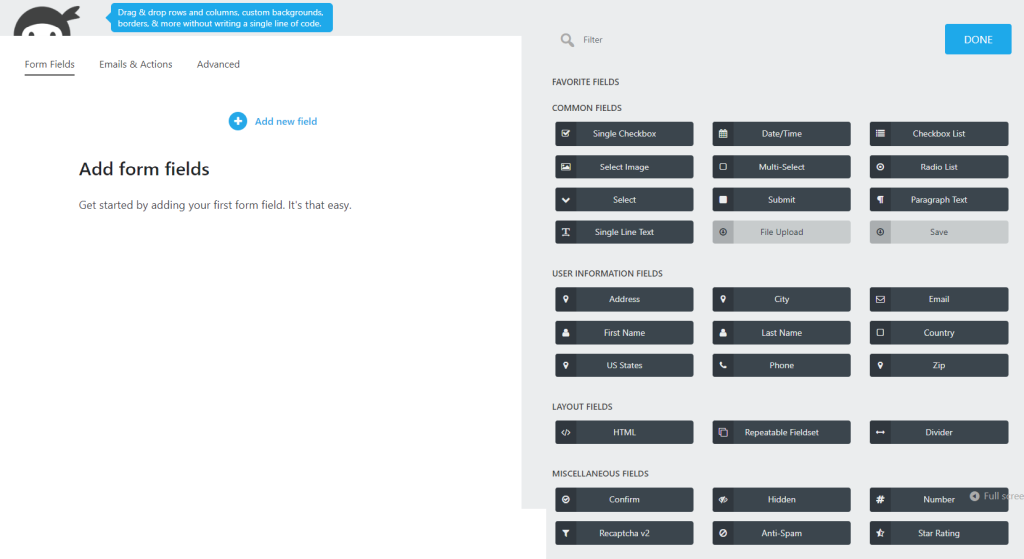
WordPress form users need to learn the unique approach to form creation taken by each form plugin. If users switch form plugins, their earlier form work is locked up with the previous plugin & they need to learn how to use the new plugin.
There are some significant downsides to forms having never been done in WordPress core.
Forms in the pre-Gutenberg era #
Most WordPress form plugins come from the pre-Gutenberg era and typically do not operate directly in the Gutenberg/Block Editor. Instead they have entirely separate UIs that operate in the WordPress Admin.

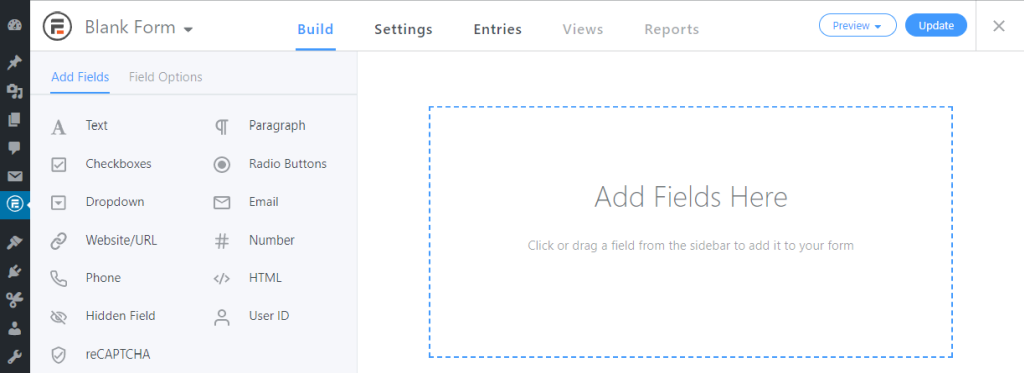
Some of these plugins offer a block to add an individual form to a page or post rather than the older Shortcode method.
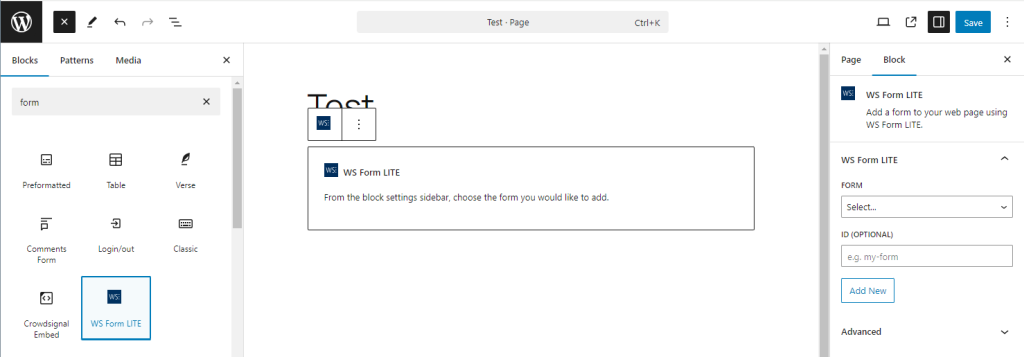
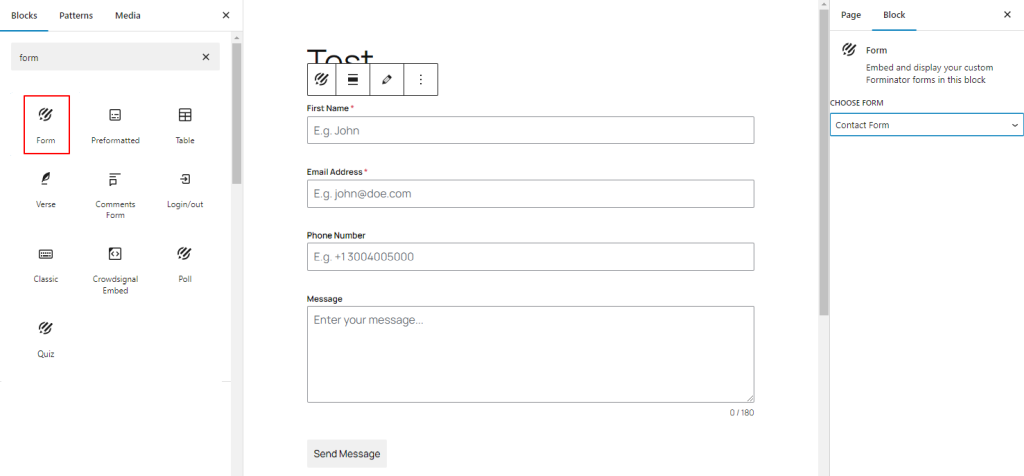
This is a useful start but does not meet the overall needs of Block Editor users. All of the real action happens back in each form plugins unique user interface (UI).


WordPress form plugins from the pre-Gutenberg era do not operate directly in the Block Editor.
Forms directly within the Gutenberg/Block Editor using Form Block #
The Form Block bring forms directly within the Block Editor including:
- Adding & editing forms directly on any page or post
- Editing all form functionality directly in the form block
- Using all the power of blocks (like patterns) in block editor forms.
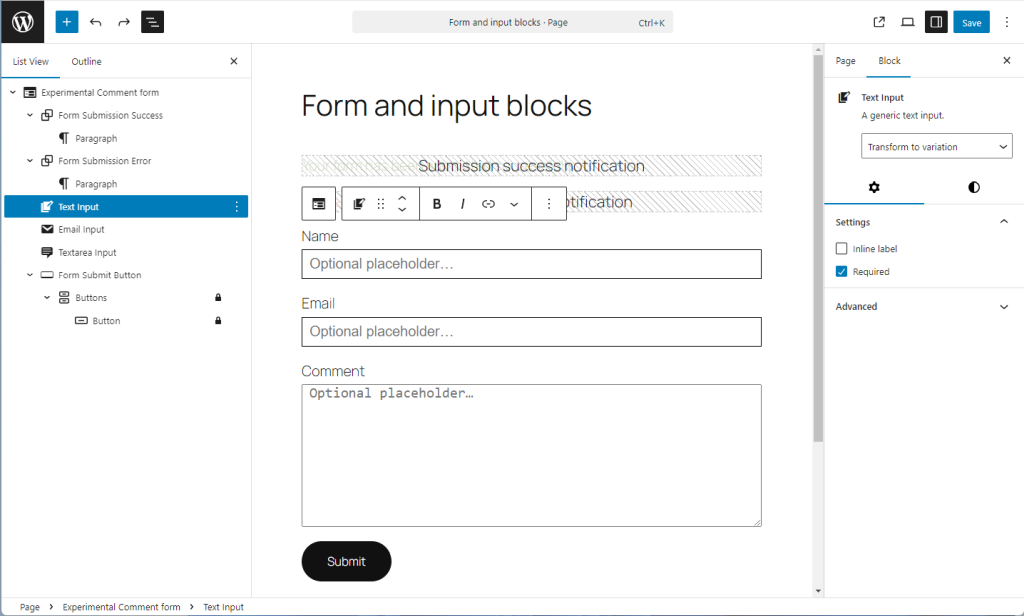

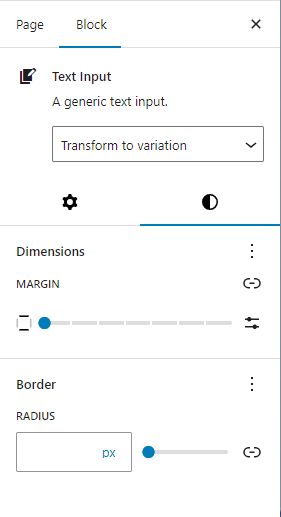

The Form Block brings all the advantages of using blocks to building forms directly in the Block Editor.
Better Forms all round via Form Block #
The Form Block is an opportunity to build forms directly within the Block Editor including:
- in a way that is properly accessible
- provides the basis of a more consistent UI for form creation in WordPress
- is easily extendable by existing WordPress form plugins.
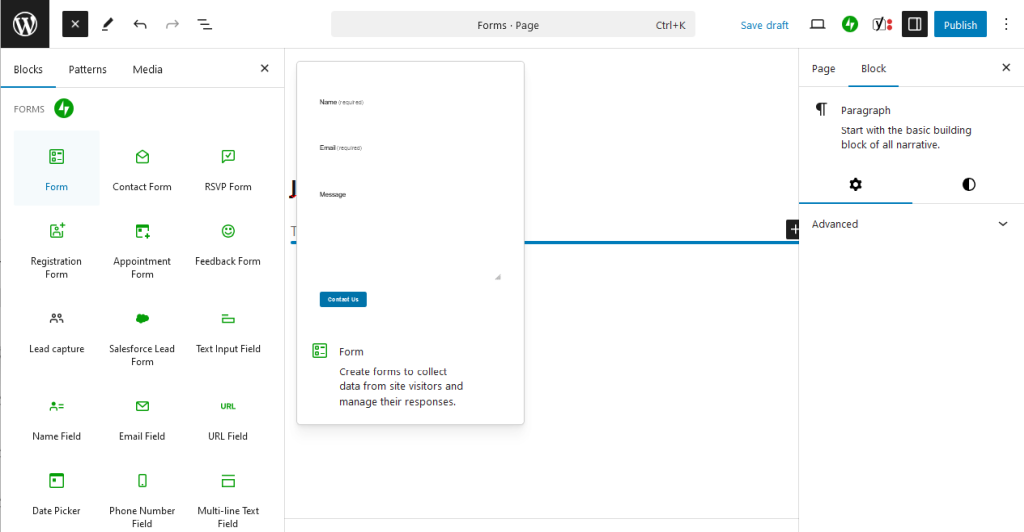

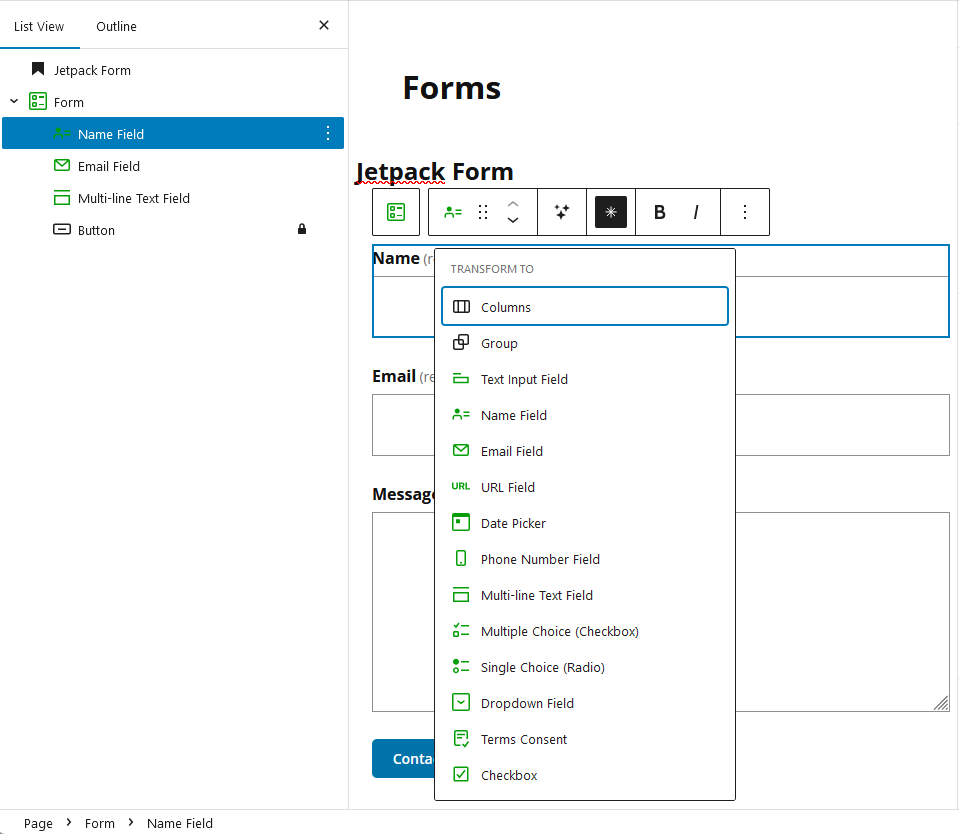
When what was previously plugin territory, becomes an inherent part of WordPress core, it is possible that WordPress core will meet all the form needs of 80% of WordPress users.
It will no longer be necessary to find out about, install & active a plugin like Contact Form 7 or Jetpack to have a simple Contact Form on your site.
The Form Block is an opportunity to bring forms to WordPress core.
Conclusion #
The Form Block could improve the WordPress user experience by:
- simplifying form creation for basic form needs & improving the user experience
- providing an integrated & more consistent user interface directly within the Block Editor
- ensure forms are accessible by default, potentially leading to a better experience for users with disabilities
- offering a foundational layer for more complex form solutions to be provided by form plugins directly within the Block Editor.
The overall goal is to make adding simple forms as easy as adding any other content block.
Here at CF7 Skins we’ve made a decision to get involved & contribute to the development of the Form Block in WordPress core.
Neil Murray