The Gutenberg Team is tackling creating a Form Block for WordPress core via an experiment in the Gutenberg plugin.
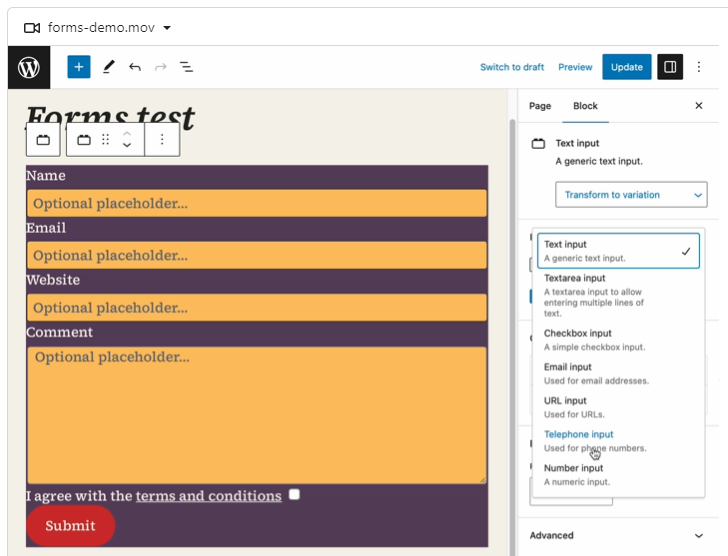
To see the current state of this experiment you need to install the latest version of the Gutenberg plugin & activate the Form and Input blocks option.
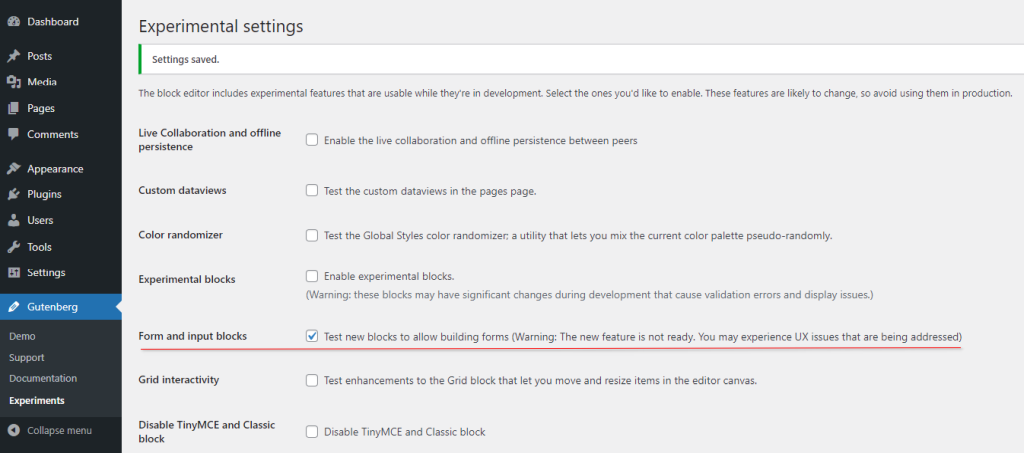
Table of Contents #
- Progress so far
- Widespread support for bringing forms to WordPress core
- WordPress form plugins ecosystem could change dramatically
- Existing WordPress form plugins
- Current Form Plugins UI
- Jetpack Form plugin supports editing forms directly in the Block Editor
- Forms in WordPress core
Progress so far #
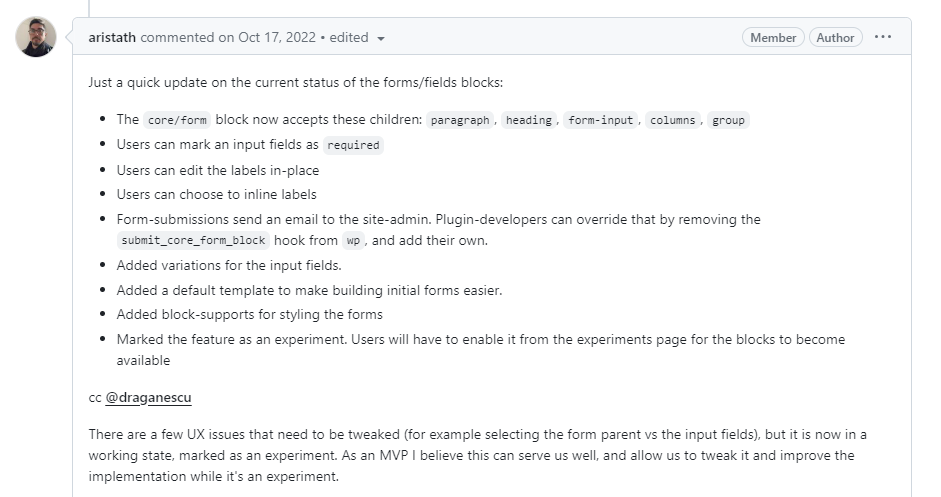
Ari Stathopoulos started the work on this experiment in Introduce experimental form & inputs blocks to allow building basic forms.

This Pull Request included:
- basic form building functionality
- most standard HTML form fields
- a couple of different form templates
- sending form submissions via email
- inline labels & required fields.
The Pull Request is of course just the start of a long process that would be required to bring forms directly into WordPress core.
The Pull Request provides a solid basis for further work to proceed on adding forms directly into WordPress core.
Widespread support for bringing forms to WordPress core #
Comments on this Pull Request indicate there is support for adding forms as an experiment within the Gutenberg plugin.

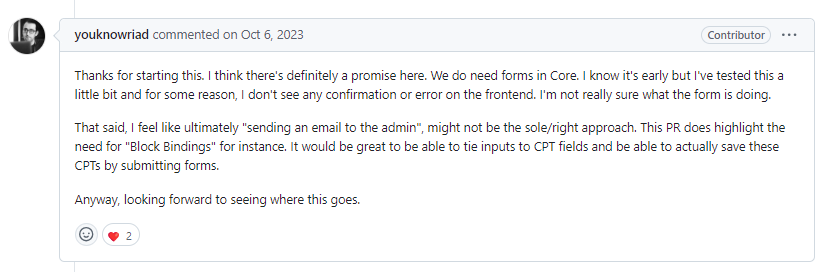
There also appears to be widespread support for eventually adding the form block within WordPress core.
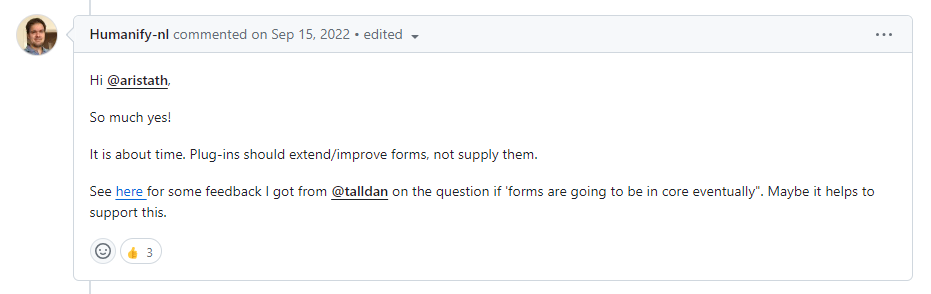
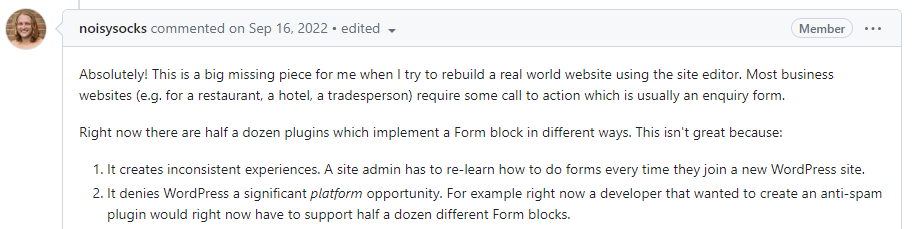
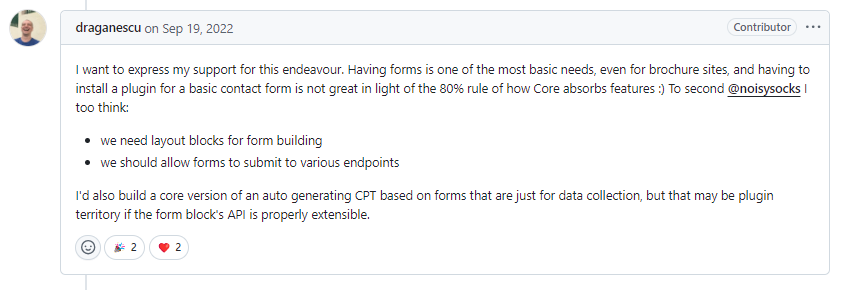
Refer: Feature suggestion: Form & input blocks #44186
There appears to be widespread support for bringing forms to WordPress core.
WordPress form plugins ecosystem could change dramatically #
Introduction of the Form Block into WordPress core, combined with the general widespread adoption of blocks, can provide both the incentive & practical means for form plugin authors to:
- Add & edit forms directly on any page or post
- Change all form functionality directly in the form block
- Use all the power of blocks (like patterns) in block editor forms.
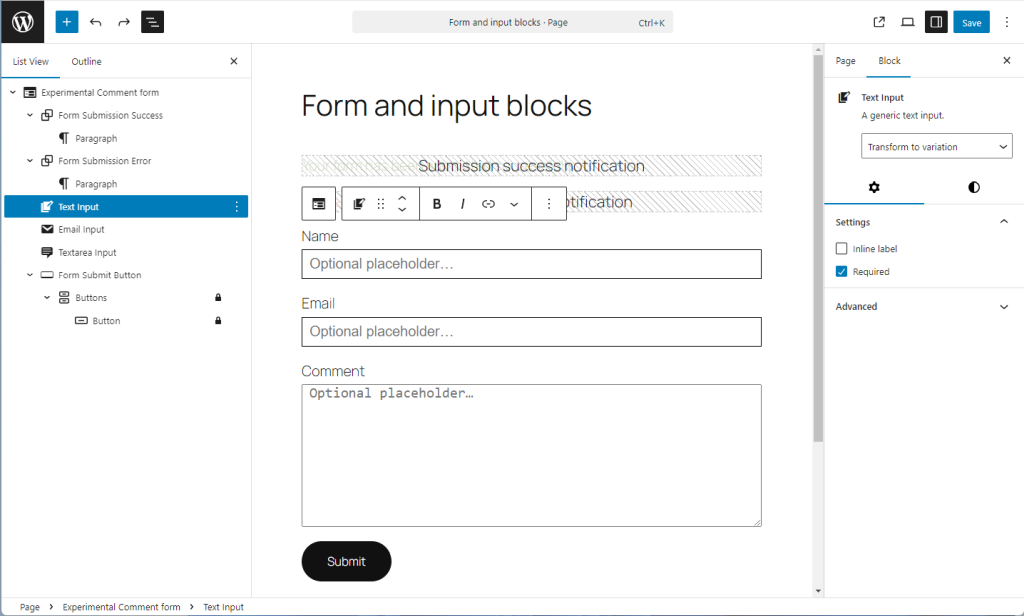
I believe new WordPress users are going to increasingly expect forms to be done directly as a block on any page or post.
The WordPress form plugins ecosystem could change dramatically if the Form Block eventually makes it into WordPress core.
Existing WordPress form plugins #
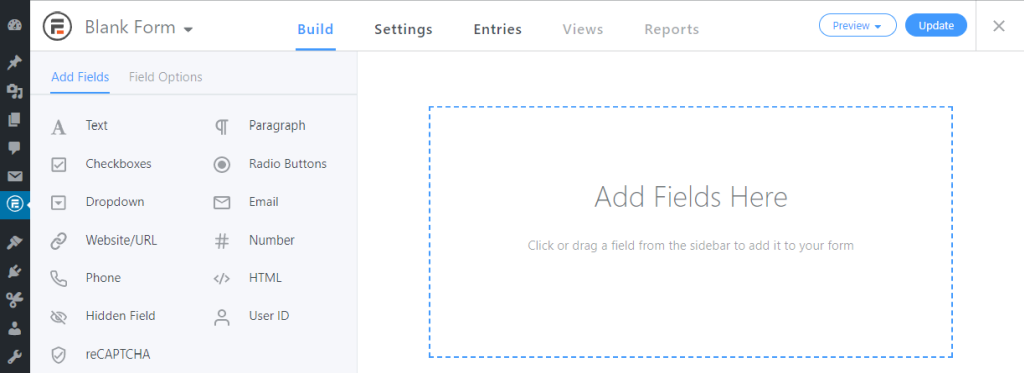
At this stage many of the existing major form plugins don’t support creation & editing of their forms directly in the Block Editor. Instead they have entirely separate UIs that operate in the WordPress Admin.

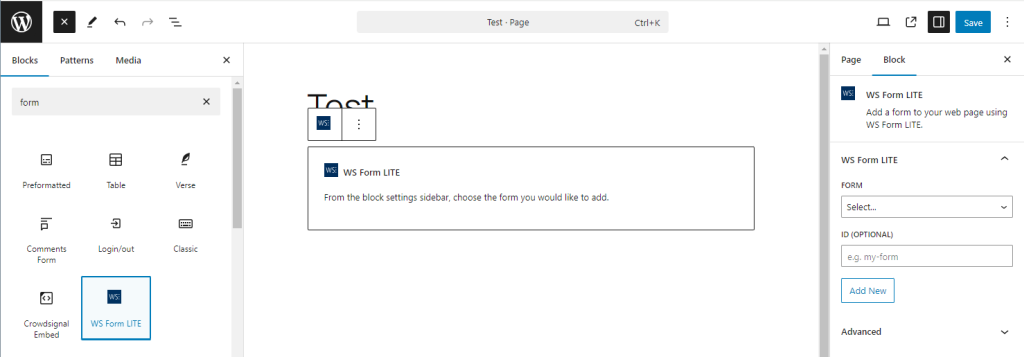
Several form plugins have added Gutenberg Blocks which replace having to add a Shortcode in the Block Editor. This is a useful start but does not meet the overall needs of Block Editor users.
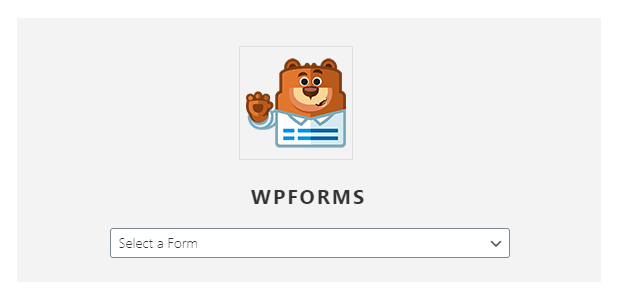
It is likely that Block Editor users will increasingly expect everything they need on their website added via a block in the page or post.
Existing form plugins generally don’t support creation & editing of their forms directly in the Block Editor.
Current Form Plugins UI #
Most WordPress form plugins come from the pre-Gutenberg era and typically do not operate directly in the Gutenberg/Block Editor. Instead they have entirely separate UIs that operate in the WordPress Admin.
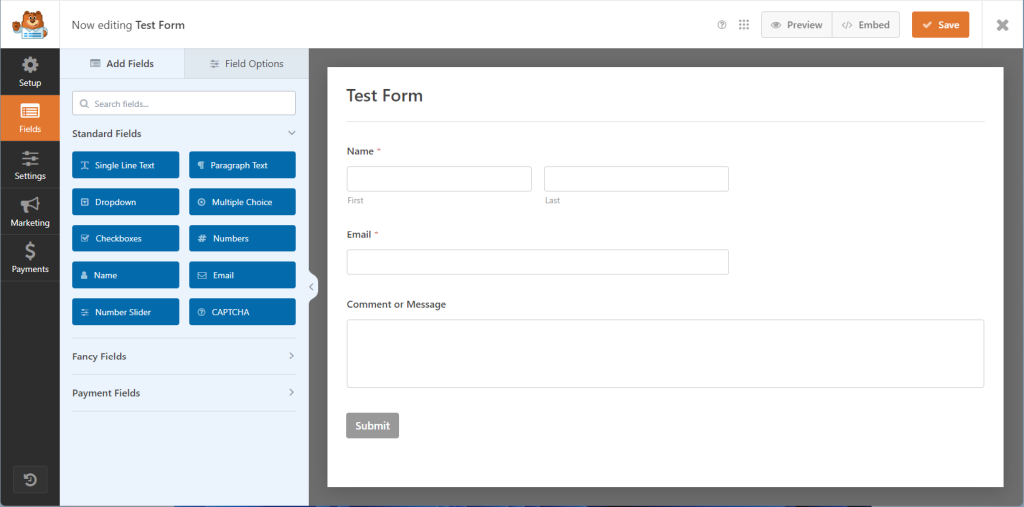
Switching to the form plugins UI to create and edit a form makes sense when using the Classic Editor. But it’s likely to seem cumbersome to someone who has only ever used the Block Editor since they discovered WordPress.

New WordPress users don’t have the grounding in Shortcodes that older users have.
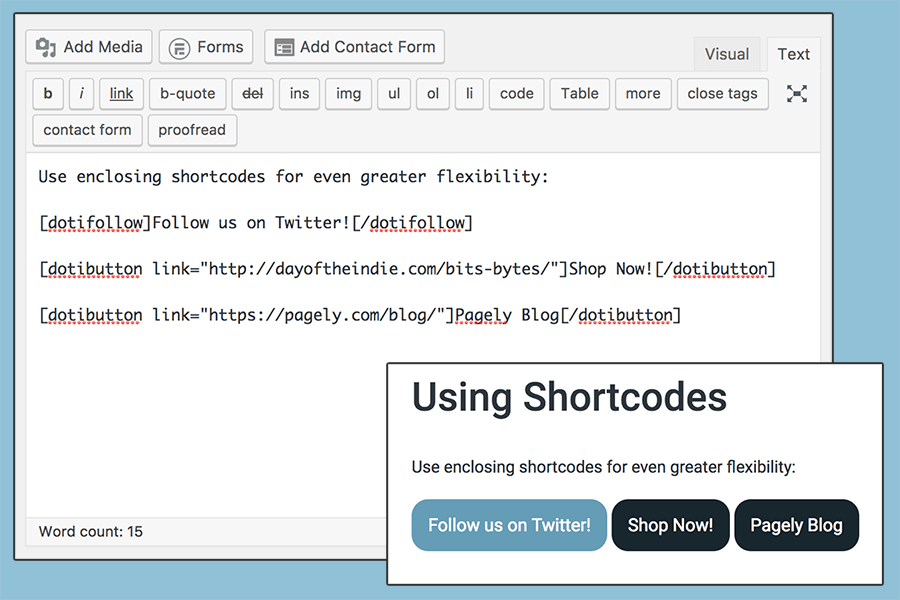
In a world of Shortcodes, the separate WP Admin UI that existing form plugins use, makes sense. In a Block based WordPress world, they’re a foreign object that new WordPress users don’t understand.
By the way, I’m not suggesting to throw out the existing Form Plugin UIs. It makes sense to keep these available for existing users.
Jetpack Form plugin supports editing forms directly in the Block Editor #
In a separate exercise, the Jetpack plugin has created a new experience for form creation. The Jetpack Form Block uses the capabilities of the Block Editor for all form interactions by users.

This provides another model of how forms can be created & edited directly within the Block Editor. This is now being used for form creation at wordpress.com & is being actively worked on by the Jetpack team. The Jetpack Form Block uses the capabilities of the Block Editor for all form interactions by users.
The Jetpack Form plugin now supports creation & editing of forms directly in the Block Editor.
Forms in WordPress core #
If the Form Block eventually makes it into WordPress core, this is likely, over time, to bring a fundamental change in the way many WordPress users build their forms.

Form plugins will still serve the needs of the many WordPress users that need more complex forms – a job they’ve done very well for years.
However, existing Form plugins that embrace this fundamental change & incorporate the Form Block, will likely see greater usage & popularity. Other form plugins that don’t will possibly see declining usage.
I see the Form Block as the basis of a new way to create & edit forms, directly in the Block Editor, that is likely to become dominate over time.
Here at CF7 Skins we’ve made a decision to get involved & contribute to the development of the Form Block in WordPress core.
Neil Murray